Learning Resources and Printable Activities for Special Needs & Early Learners

"How to teach Emotions to Nonverbal and Special Needs Children"
Helping Children express their feelings can change their world- even without words. Here's how parents and caregivers can build emotional understanding using visuals, play, and empathy.
ExtraordinaryKidsCare Family
10/20/20252 min read
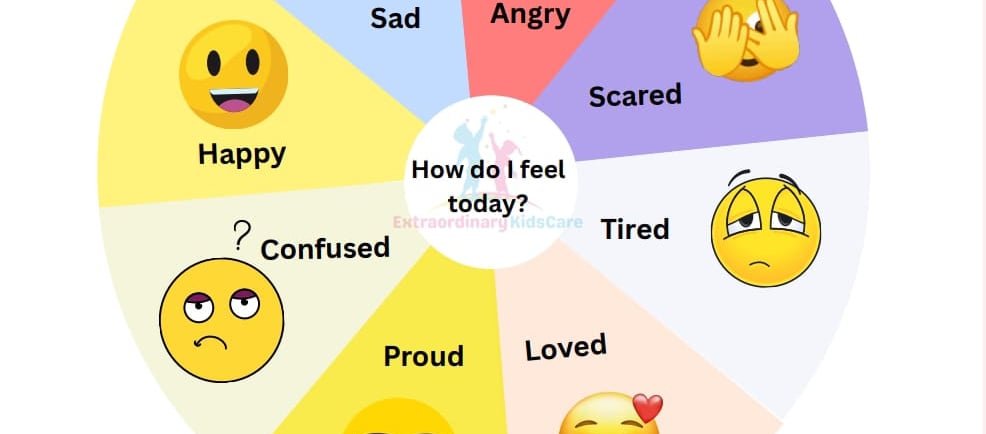
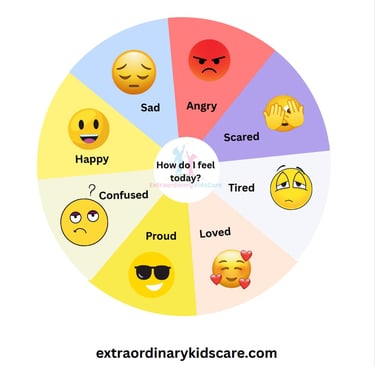
🧩 How to Teach Emotions to Nonverbal and Special Needs Children
For many children with autism, speech delay, or sensory needs, expressing feelings like sad, angry, or happy can be challenging.
But emotions are still there — they just need a way to come out. 💛
At ExtraordinaryKidsCare, we’ve seen how the right visual tools and gentle communication can help children connect emotions with real experiences.
🌟 1. Start with Visuals, Not Words
Children understand pictures before language.
Use Emotion Flashcards or Emotion Wheels to show faces with different expressions — happy, sad, angry, scared, proud, calm.
👉 Point and label: “This is happy. This is sad.”
👉 Repeat often — during play, story time, or after an emotion happens.
Tip: Keep it fun! Make silly faces together and ask, “Can you show me happy?” 😄
💬 2. Connect Feelings to Daily Life
Link emotions to real moments your child experiences:
“You’re smiling — you look happy!”
“You’re crying — you feel sad.”
“You’re jumping — you’re excited!”
The goal isn’t to “teach words” but to help children recognize patterns between feelings, actions, and faces.
🎨 3. Use Play and Art
Drawing faces, coloring emotions, or using mirrors can turn learning into fun.
Let your child draw how they feel today — with colors, not words!
👉 Blue for calm, red for angry, yellow for happy — any color they choose is valid.
🧠 4. Practice with Social Stories
Short, simple Social Skills Flashcards or story scenes help children learn what to do in emotional moments — like when a friend is sad or someone drops a toy.
You can say:
“Your friend fell down. What should you do?”
“We can help or say, ‘Are you okay?’”
This helps kids understand empathy and responses step by step.
🪄 5. Model Emotional Talk Every Day
Children learn best by watching.
Use calm words to describe your own feelings:
“I feel tired, so I’ll rest.”
“I’m happy because you helped me.”
It shows that feelings are normal and safe to express.
💛 Remember: Every Feeling is Valid
Children may not speak yet — but they feel deeply.
The goal isn’t perfection, it’s connection.
Each time you pause, name a feeling, and respond with care, you’re helping your child build emotional intelligence — one gentle moment at a time.
🌟 Recommended Tools from ExtraordinaryKidsCare
🧠 Feelings & Emotions Flashcards Pack – Helps children recognize and name emotions.
🎭 Social Skills Flashcards – Teaches emotional situations and what to do.
🎨 Color the Feelings Worksheets – Encourages children to express emotions through art.