Learning Resources and Printable Activities for Special Needs & Early Learners

Helping Special Needs Kids Learn Better With Visual Tools
Discover how Visual learning tools like flashcards, emotion charts, and daily routine worksheets can help children with Autism, ADHD, and Speech delays communicate, understand emotions, and build confidence. At Extraordinarykidscare, we make learning joyful and meaningful - One picture at a time.
ExtraordinaryKidsCare Family ✨ Together, we learn, grow, and care for every extraordinary child.
10/11/20252 min read
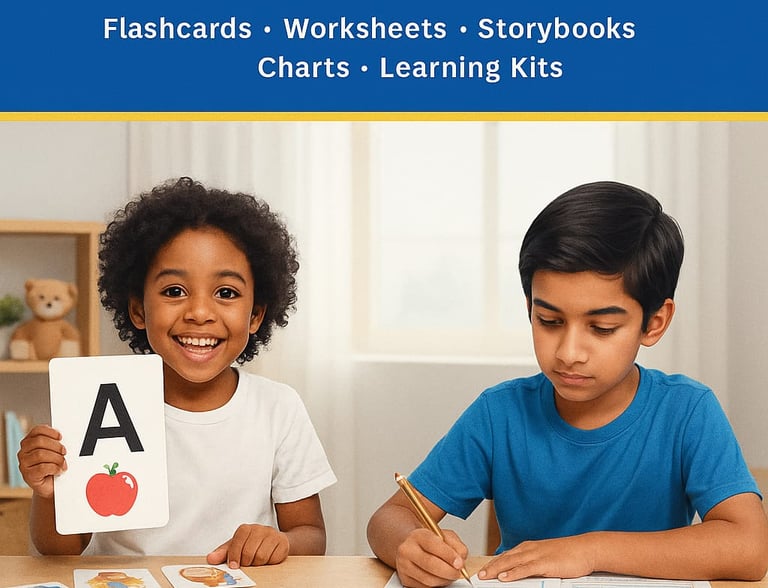
🌈 Helping Special Needs Kids Learn Better with Visual Tools
💛 Every Child Learns Differently
At ExtraordinaryKidsCare, we believe that every child deserves to learn in a way that makes sense to them.
For many children with Autism, ADHD, or speech and language delays, words alone can feel confusing — but pictures speak clearly.
That’s why we design simple, colorful visual learning tools like flashcards, emotion charts, and daily routine worksheets to help children understand, communicate, and grow confidently.
🧩 Why Visual Learning Works
Visual learning gives children a way to see and connect ideas quickly.
When children look at pictures, they can recognize actions, routines, and emotions without needing to read or remember long instructions.
Here’s why it’s so powerful:
🖼️ Visuals make learning clear and concrete.
A picture of brushing teeth is easier to understand than just the word “brush.”
💬 It helps with communication.
A child who can’t say “I’m hungry” can point to a flashcard and express their needs.
😊 It builds emotional understanding.
Emotion cards help kids recognize feelings like happy, sad, angry, and calm — and talk about them.
It supports memory and structure.
Routine charts remind children what comes next, reducing anxiety and improving focus.
🌟 How Parents Can Use Visual Tools at Home
You don’t need to be a therapist or teacher to use these tools — just a few minutes every day can make a big difference!
Try these simple ideas:
1. Morning Routine Practice
Use a Daily Routine Chart to show what to do after waking up — brush teeth, get dressed, eat breakfast.
👉 Tip: Let your child move a star or sticker after each task!
2. Emotion Check-Ins
Ask, “How do you feel today?” and use an Emotion Wheel to help your child point to their mood.
👉 Tip: Model your feelings too — “I feel tired, but I’ll take a rest.”
3. Action Word Playtime
Pick an Action Flashcard (like running, eating, or sleeping) and act it out together.
👉 Tip: Turn it into a guessing game — “Can you show me what jumping looks like?”
4. Manners and Behaviour Practice
Role-play situations using Behaviour Flashcards — for example, “What should you do when your teacher is talking?”
👉 Tip: Praise positive behaviour with warm words like “You remembered to raise your hand — great job!”
5. Social Skills Scenarios
Use Social Situation Cards to talk about real-life situations like dropping a toy, saying thank you, or helping a friend.
👉 Tip: Ask open-ended questions like “What would you do next?”
🪄 Small Steps, Big Confidence
When children start using visuals, parents often notice small but meaningful changes:
They begin to speak more words
They stay calm during transitions
They feel proud of finishing tasks on their own
Every flashcard or routine chart is more than just paper — it’s a step toward independence and confidence.
💛 Our Mission at ExtraordinaryKidsCare
We started ExtraordinaryKidsCare in a small flat with one big dream —
to make learning joyful and simple for children who need extra care.
Today, our printable tools are reaching homes, therapy centers, and classrooms across India and abroad.
Every purchase you make helps us create more resources and support special needs children in building life skills.
Together, we can make the world a little more inclusive — one flashcard at a time. 🌍✨
Try These Popular Visual Packs:
🕒 Daily Routine Visual Pack – Morning to Night routine + reward chart
💬 Communication Flashcards – “I want”, “Yes/No”, “Help me”, and more
🎭 Feelings & Emotions Pack – Teach emotional understanding
🧍♂️ Action Words Pack – Learn through movement
🌟 Social Skills Flashcards – Real-life behavior situations.
“Learning with Love and Visuals 💛”